
Recognition of Foreign Documents in Uzbekistan: Legalisation, Apostille, and Notarised Translation
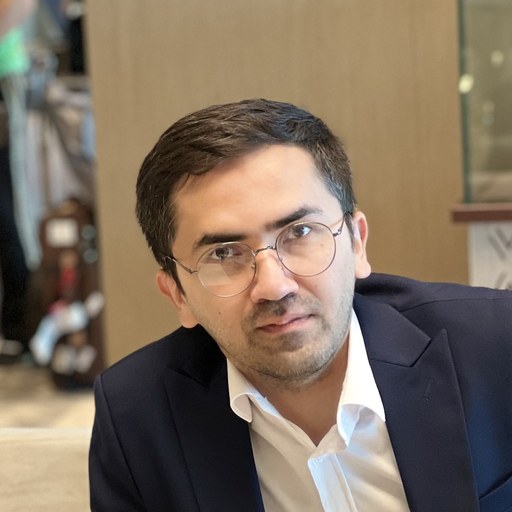
A foreign document does not automatically carry legal weight in Uzbekistan — it must go through an established recognition procedure. In this article, a notary from the Yunusabad district of Tashkent explains what legalisation and apostille mean, when each is required, and how to prepare your documents correctly.
Why a Foreign Document Cannot Stand Alone
If you have obtained a document abroad — a university degree, a marriage or birth certificate, a power of attorney, or a court judgment — and wish to use it in Uzbekistan, presenting the original alone is not enough. Government authorities, banks, and other institutions in Uzbekistan are entitled to accept foreign official documents only once their authenticity has been confirmed through the proper procedure, and the text has been translated into Uzbek or Russian with a notarially certified translation.
In my day-to-day practice I regularly see clients lose valuable time simply because they arrive with a document that has not yet completed this process. It is always better to understand the requirements in advance.
Key points:
- Foreign documents are recognised in Uzbekistan either through legalisation or by affixing an apostille — the applicable route depends on the country of origin.
- A translation of the document into Uzbek or Russian must be certified by a notary.
- The exact procedure depends on the type of document, the country that issued it, and the purpose for which it will be used.
- Please verify current fees and processing times with a notary at the time of your appointment, as rates are periodically revised.
---
Two Main Routes to Recognition: Legalisation and Apostille
By sending the request you agree to the processing of personal data (policy)
Mon–Fri 9:00–18:00 · +998 99 050 50 70
Apostille is a simplified form of authentication used between countries that are parties to the Hague Convention of 1961. If both the country that issued the document and Uzbekistan are signatories to the Convention, it is sufficient to have an apostille affixed to the document in the country of origin. The apostille is issued by the competent authority of that country — typically the Ministry of Justice or a court.
Consular legalisation applies when one of the parties is not a member of the Hague Convention, or when an apostille is otherwise unavailable. This is a multi-step procedure: the document is successively authenticated by the competent authorities in the issuing country, then by the Uzbek consulate abroad (or by the foreign state's consulate in Uzbekistan).
In both cases, once the recognition procedure is complete, a notarially certified translation of the document is required.
---
Summary Table: Document Types and General Procedure
| Document type | Typical recognition route | Points to note |
|---|---|---|
| University degree / diploma | Apostille or legalisation + translation | Additional recognition by the relevant sector authority may be required |
| Marriage / birth certificate | Apostille or legalisation + translation | The civil registry authority may request supplementary information |
| Power of attorney issued abroad | Apostille or legalisation + translation | The scope of authority must comply with Uzbek law requirements |
| Foreign court judgment | Legalisation (as a rule) + translation | Recognition of foreign judgments is governed by separate rules; legal advice is essential |
| Company registry extract | Apostille or legalisation + translation | Check that the document is current — registry extracts can become outdated |
---
Notarised Translation: Why It Is Mandatory
Even a correctly legalised document will not be accepted without a translation certified by a notary. The notary does not certify the content of the text — that is the translator's responsibility — but rather the authenticity of the translator's signature. I recommend arranging a translator you trust in advance, or you are welcome to ask our office to recommend a qualified professional.
Please note: the translation must be complete, with no omissions. Translating only the
By sending the request you agree to the processing of personal data (policy)
Mon–Fri 9:00–18:00 · +998 99 050 50 70
Let’s review your case
FreeLeave your number – a lawyer calls back within 15 minutes during business hours and tells you what to do.
Get a consultationPractising private notary of the Yunusabad district of Tashkent. Certifies transactions, powers of attorney, inheritance and family documents under the law of the Republic of Uzbekistan.
Read also
 1 min read
How to Execute a Power of Attorney While Abroad
A practicing notary's guide: how to properly execute a power of attorney from another country through a consulate or local notary, what documents you need, and what you must know for the document to be valid in Uzbekistan.
 1 min read
Image Use Consent: When Notarization Matters
Learn when photo and video consent requires notarization, which documents to prepare, and how to protect your rights when publishing images in Uzbekistan.
 1 min read
Notarized Translation of Driver's License for Working Abroad
A comprehensive guide to notarized translation of driver's licenses and related documents for employment abroad. Learn which documents you need, the process, and important considerations when preparing to work as a driver internationally.